
 (
( 

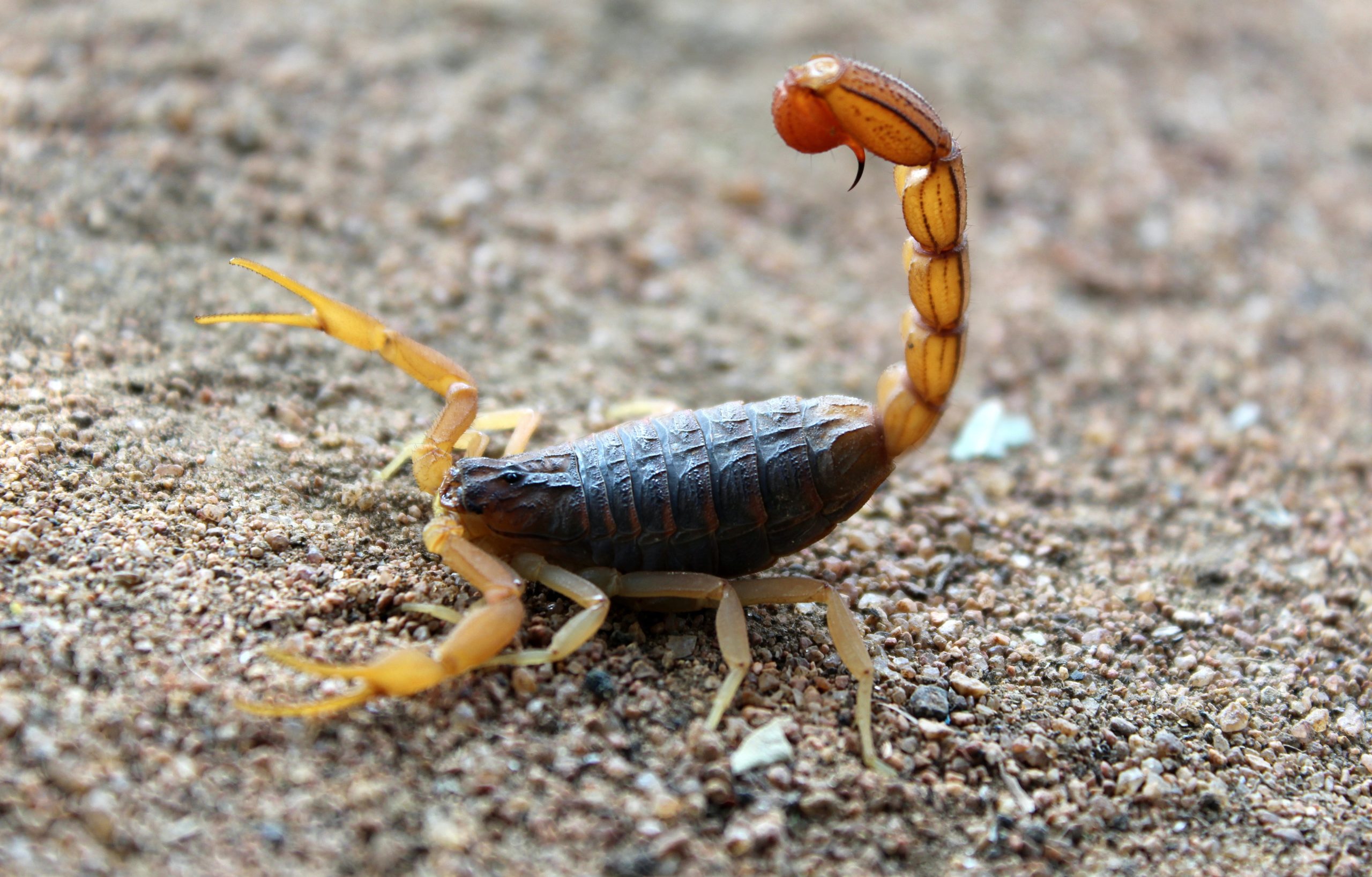
Careful Measures When Dealing with Scorpions
While scorpions are best known for living in desert areas, there is at least one species, the Striped Bark Scorpion, that can be found in Arkansas and Oklahoma. The Striped Bark Scorpion is yellowish brown with dark brown bands and a brown or black stinger on the end of its curved tail. Adult Striped Bark Scorpions grow to about 2.5 inches. While the venom of the Striped Bark Scorpion is not highly toxic to humans, these pests can still deliver a painful sting that can cause serious medical issues for an allergic person or a young child.

It is extremely important to take care when dealing with scorpions. In addition to the advice below, remember that West Termite, Pest & Lawn can safely remove scorpions so that you can ensure your family won’t encounter them inside your home.
Shake clothes, shoes, and bedding
If you suspect that you have a scorpion infestation in your home, or especially if you have seen a scorpion indoors, be very careful when getting dressed or dressing young children. Scorpions like to hide in dark spaces, especially during daylight hours. They tend to seek security in drawers and attics. Thoroughly shake out all clothing and shoes before putting them on. This is especially true when the seasons change and you bring out clothing and footwear that has been stored in an attic or garage for several months. Remember to check inside pockets, too. And don’t forget your bedding. When you wake up in the morning, make your bed promptly. Rumpled bedding, especially if it drapes to the floor, provides a very attractive safe haven for scorpions, who are adept at climbing. Tucking in your sheets and pulling your bedspread up over your pillow helps you keep your bed cozy and safe.
Don’t walk around barefoot
While it’s important to check your shoes when dealing with a scorpion infestation, it is equally important to always wear shoes and resist the temptation to just run barefoot. Because the kind of scorpion found in Arkansas and Oklahoma, the Striped Bark Scorpion, only grows to a little over two inches long at its adult size and is typically fairly light-colored, it can be easy to overlook one when taking a step, especially if it is on the ground in a shadowy room. Closed toe house shoes offer more protection than shower sandals or open-toed slide-style house slippers.
Reduce moisture in and around your home
Scorpions are attracted to human living spaces because of the easy access to moisture that these areas often offer. To make your home and property less inviting to scorpions, take steps to reduce the sources of water that are available. Be careful not to leave damp towels on the floor in your bathroom, and repair faucets if needed to prevent continuous drips (this goes for bathrooms, kitchens, and outdoor plumbing.) After showering, run the exhaust fan in your bathroom or at least crack a (screened!) window to allow the area to dry properly. Check pipes regularly to be sure there are no hidden leaks drawing scorpions to your crawlspace or under-sink cabinets.
Seal off all cracks and openings
Striped Bark Scorpions are small and can squeeze through even the slimmest cracks and openings. Periodically check your home for places that might need to be sealed with a filler such as caulk or weather stripping. Door sweeps are easy to install and go a long way toward blocking a scorpion’s entry to your home–or even the entry of a different pest which provides a food source for a scorpion.
Eliminate food sources
Speaking of food sources, scorpions are voracious, carnivorous predators of other pests such as cockroaches, beetles, flies, ants, spiders, and crickets. Eliminating any of these populations that may be present in or around your home can help you deal with an existing scorpion problem or prevent this issue from plaguing your home. A trusted exterminator such as West Termite, Pest & Lawn can help you deal with all of these pests so that you can relax.
More posts from West Termite, Pest & Lawn

Why Late Summer Is Still Prime Time for Termite Activity
By the time August arrives, many homeowners assume termite season is winding down. Summer vacations, lawn care, and outdoor projects may have taken priority, and the idea of termites quietly working around the home may be far from anyone's mind. That assumption can be...

How Summer Storms Can Increase Pest Activity
Summer storms can bring much-needed rain and relief from extreme heat, but they can also create a new set of problems around your property. Heavy rainfall, strong winds, flooding, and sudden changes in temperature can disturb pests and alter the conditions they depend...

How Summer Heat Changes Pest Behavior Around Your Home
Summer heat does more than make your home uncomfortable. It can also change how pests behave, where they search for food and water, and how aggressively they move around your property. As temperatures climb across Arkansas, Oklahoma, and Missouri, homeowners may...